what action caused the Japanese to surrender unconditionally
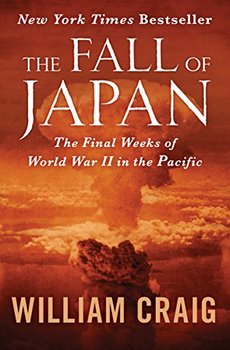
Few people today wonder what led to Nippon'southward unconditional surrender in Globe State of war 2. The United States dropped atomic bombs on the cities of Hiroshima and Nagasaki, and the Emperor caved. Chore done. Simply of course the reality was far more complex. And the issue was anything merely certain.
Twenty-two years after the war concluded, American historian William Craig revealed how that decision came about. He dug into hidden documents and spoke with dozens of those who played pivotal roles at the time both in Nippon and the US. Day-past-day, and often hour by hour, Craig reconstructed the events that unfolded in Tokyo as the Empire of Japan pondered the Allies' inflexible demands. He focused on the fateful days between August 9, 1945, when Fat Man detonated over Nagasaki, and Baronial 15, when Emperor Hirohito radioed a message to Switzerland accepting the Allied terms of surrender. The story Craig tells in The Fall of Japan is at once compelling, agonizing, and illuminating. This volume is a stellar example of how history tin shine a bright light underneath the surface myths and reveal the messy human reality of the past.
What really led upwards to Japan's unconditional give up
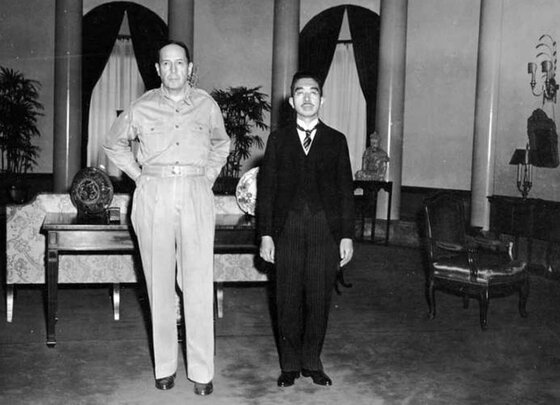
Emperor Hirohito (1901-89) was universally revered as a god by the Japanese people. Small wonder, then, that readers three-quarters of a century later might assume that all the man had to do was snap his fingers for the regime to practice his bidding. Just that was far from the truth. Centuries earlier, during the shogunate of the Edo flow (1600–1868), powerful warlords had sharply curtailed the emperor's power. Although he was nominally restored to supreme power during the Meiji flow (1868–1912), it was quondam samurai rather than the emperor who exercised real power.
Hirohito's role was largely ceremonial
By the time Hirohito ascended to the throne in 1926, he was expected to observe the authorities and remain silent. Although controversy continues to surround his office in launching and prosecuting World War Ii, William Craig's account makes clear that Hirohito quietly supported the armed forces throughout the conflict. Just in the darkest days of Baronial 1945 after nuclear weapons fell on Hiroshima and Nagasaki and the Soviet Union attacked the Japanese regular army in Manchuria did the emperor understand the end was truly at hand. Merely when he and members of his court and cabinet began to maneuver behind the scenes to motility toward peace, the military pushed back. Japan'south unconditional surrender? Unthinkable!
Diplomats struggled to reach a peace agreement
Equally Craig notes, "While the new American President grappled with the problems of impending victory in the Pacific, and while the new Japanese Premier endeavored to construct some workable alternatives to absolute defeat, diplomatic and intelligence personnel of both nations were engaged in desperate, all the same hopeful, schemes for ending the disharmonize chop-chop." Yet their hopes foundered on the shoals of resistance by Japan'southward armed forces. And the military overshadowed the civilians in what was known as "the Large Six, Nippon'southward 'inner cabinet,' formally named the Supreme Quango for the Direction of the War." The war cabinet, in other words.
The armed forces was fanatically committed to continuing the war
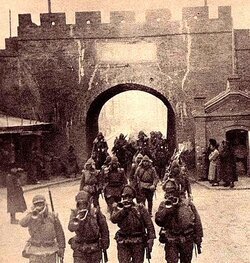
Always since the renegade Kwantung Regular army attacked Chinese troops in the Mukden Incident in 1931, the Japanese armed forces had been in the driver's seat in Tokyo. For fourteen years, the army and navy dominated government policy, frequently in biting conflict with each other. Of the ii, the army was, if anything, more powerful. But the power dynamics were circuitous. Inside both services, there were senior officers (virtually notably the late Admiral Isoroku Yamamoto) who recognized the suicidal folly of attacking the The states at Pearl Harbor.
Among the civilian leadership, likewise, opinion was divided. Only as fighting raged across the Pacific, the dissenters remained quiet. A succession of Prime Ministers were forced to bow to the will of the Ground forces, not least in fearfulness of their lives if they contradicted the generals. And when the emperor consulted privately with members of his cabinet during the final months of the war, about all advised standing to fight. Just 1 urged a negotiated settlement—even though unconditional give up alone was on the table.
Only when all hope was lost did Hirohito speak out
Meanwhile, the U.s.a. Army and Navy connected isle-hopping e'er closer to Japan'south habitation islands. Past the time Okinawa barbarous in July 1945, information technology was clear to all but the most fanatic military officers that defeat was certain. But it was the fanatics who called the shots. Even after the two atomic bombs were dropped and the Soviet Wedlock entered the war, the top leadership was sharply divided. The six-member war cabinet divide downward the middle, three against three. And the 3 who resisted either were "zealots, who all the same believed give up a worse fate than death," or feared retribution from younger officers. Somewhen, Hirohito succumbed to pressure from members of his family unit and the peace faction in the cabinet and broke nigh a century of precedent to speak out for peace. Against all odds, Japan's unconditional surrender became inevitable.
Hirohito informed the war cabinet that "I take studied the terms of the Allied reply and . . . I consider the respond to exist adequate. . . I cannot endure the thought of letting my people suffer any longer. . . At this point, the Emperor broke downwards" in tears, Craig reports. "Instead of rising to bow earlier the Emperor, most sat crying into their hands. Two men slid onto the floor. On elbows and knees, they cried uncontrollably." But their devotion to the emperor prevailed.
The leadership, even the most fanatic militarists, acceded to his wish for a settlement—only the opposition in much of the officeholder corps remained steadfast. And fanatic inferior officers—colonels, majors, captains—organized first one coup attempt, then some other. Craig follows their activities almost hour past hour during those fraught six days from the sixth through the fifteenth of August. They came perilously close to assassinating the leaders of the peace faction, kidnapping Hirohito, and endmost off all hope of dealing with the Allies.
"The war state of affairs has developed non necessarily to Nippon'south advantage"
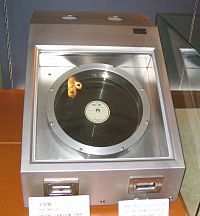
Fanatic younger officers rampaging through the Imperial Palace failed to detect the phonograph tape of the emperor'southward bulletin to the people of Japan announcing the give up. But it was a close call. And they did murder 1 of the near powerful members of the cabinet. Others in the leadership committed suicide, unable to face up the reality of surrender or consumed by guilt over the loss. Finally, however, the Japanese people heard Emperor Hirohito's high-pitched voice on the radio for the beginning time always, declaring that the state of war was over.
Fifty-fifty the words Hirohito spoke reflected the deep divisions within the empire's leadership—and his ain ambivalence—besides as a cultural bias against directness. "The war situation has developed non necessarily to Nippon'southward reward," he announced, "while the general trends of the world take all turned against her interest" and thus "nosotros take decided to consequence a settlement of the nowadays state of affairs past resorting to an boggling mensurate." Not only did Hirohito avoid using the word "give up." He also failed to acknowledge that by accepting the terms of the Potsdam Declaration, he was bowing to the inevitability of Nihon's unconditional surrender.
The Fall of Japan: The Final Weeks of World War Ii in the Pacific by William Craig (1967) 394 pages ★★★★★
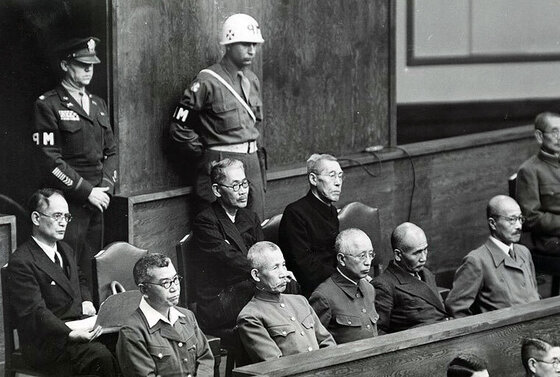
Why the Japanese resisted unconditional surrender
Fear of existence answerable for war crimes
For almost Americans, the historical memory of atrocities in World War 2 centers on the Holocaust. But in that location was no lack of depravity in the Pacific region. In the Rape of Nanking (December 1937 to Jan 1938), between l,000 and 300,000 Chinese died during those six weeks. Japanese commanders released their troops to wreak havoc in other Chinese cities as well. Tens of thousands more died. And Japanese soldiers inflicted the aforementioned sadism and brutality on the almost 140,000 Allied military machine personnel they captured in the Pacific and Southeast Asia.
"By the time the war was over," the British site Forces War Records reports, "a total of more thirty,000 POWs had died from starvation, diseases, and mistreatment both inside and outside of the Japanese Mainland." But none of this was unknown to either the war machine or the civilian leadership in Tokyo. And it was fearfulness of being held to account for these crimes against humanity that played a leading role in Japan'southward ferocious resistance to unconditional surrender even when all hope of victory was long gone.
Fear that the emperor would be deposed
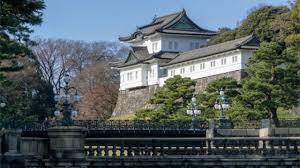
Just most accounts single out another concern that motivated the resistance to unconditional surrender amid the Japanese leadership. To their minds, the regal dynasty represented twenty-half dozen hundred years of Japanese history. It was unthinkable that catastrophe the war might bring that dynasty to an inglorious stop. Even the most determined members of the peace faction in Japanese diplomatic circles emphasized the importance of preserving the emperor'due south role in their overtures to the Allies through neutral Switzerland and Sweden.
But the root cause of the resistance was fanaticism
In the last analysis, however, it was fanaticism, pure and simple, that lay at the foundation of the resistance to surrendering. For the overwhelming majority of Japanese soldiers and sailors, and particularly and so for the officers, apple-polishing devotion to the Bushidō warrior'south code caused them to reject reality. One of the master values in the samurai life was loyalty and honor until death, never defeat, capture, and shame. For several years, ever since the tide of battle began to shift against them, thousands of Japanese soldiers at a time had ended their lives in suicidal charges against entrenched American forces. And the pace of these insanely self-destructive tactics increased in the concluding months of the conflict. Beginning in October 1944, a total of three,800 kamikaze pilots willingly went to their deaths in suicidal attacks on American warships.
A rich source of insight and perspective
The Fall of Nippon is an abundant source of insight and perspective on the final weeks of World War 2 in the Pacific. Although the writer'due south emphasis is on the struggle inside Tokyo during the critical six days that led upwardly to Japan'southward unconditional give up, he relates many other aspects of the story in telling detail.
The fateful function of the American Air Force
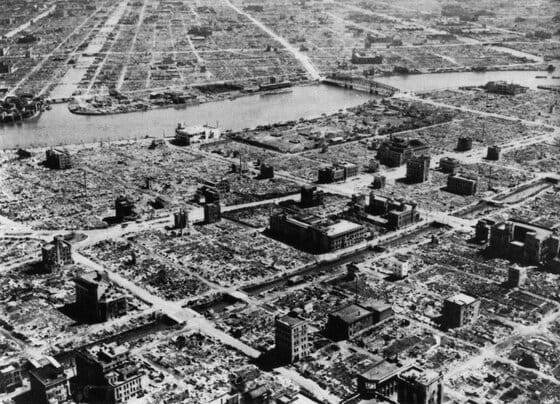
Craig traces the emergence of the United states of america Army Air Strength as a fundamental role player in the state of war's endgame. He details the firebombing strategy of General Curtis Lemay (1906-xc) that killed far more Japanese than both the atomic bombs. Craig characterizes the firebombing of Tokyo every bit "the near ferocious holocaust ever visited on a civilized customs." The bombing there destroyed over 250,000 buildings, flattened almost sixteen square miles, and killed more than 100,000. Later, he follows the evolution of the plan to drib the cantlet bomb, dogging the footsteps of the crews of the B-29s through weeks of training and so on their fateful runs over Hiroshima and Nagasaki. His shattering accounts of the consequences for the people of those 2 doomed cities call to mind John Hersey's Pulitzer-Prize-winning reporting in his 1946 book, Hiroshima.
Continuing resistance by Japanese soldiers
Even after the emperor's message was broadcast, fanatic soldiers and sailors connected to deed as though the war had not ended. Some rounded up captured B-29 pilots and summarily executed them. Others murdered their own colleagues who refused to join in standing efforts to undermine the surrender. "Both in Japan and on the fringes of the Empire," Craig reports, "trouble continued to plague the attempts at orderly surrender." American soldiers pressed into the OSS to advance the American occupation of Japanese POW camps found themselves taken prisoner by camp commandants who doubted the authenticity of reports nigh the surrender. And the American soldiers who were start sent to Nihon landed in fear of their lives. The Japanese officers sent to welcome them were fearful, besides, that some deranged soldier might open up up on them with a semi-automatic weapon.
Historian and novelist William Craig (1929-97) wrote ii espionage thrillers besides as 2 widely respected nonfiction works almost World War Two. As his bio at the back reveals, "he interrupted his career as an advertisement salesman to appear on the quiz prove Tic-Tac-Dough in 1958. With his $42,000 in winnings—a record-breaking corporeality at the time—Craig enrolled at Columbia University and earned both an undergraduate and a master'south degree in history." The Fall of Nippon was the first production of his teaching.
For boosted reading
This book is ane of the best Books about World State of war Ii in the Pacific.
For a lucid and detailed business relationship of the behind-the-scenes negotiations between Japan and the USA, encounter Unconditional: The Japanese Give up in World State of war II past Marc Gallicchio (The unconditional Japanese surrender in WWII). And for an intriguing alternate history, see 1945 by Robert Conroy (What if Nippon hadn't surrendered?).
Yous might likewise be interested in:
- 10 top nonfiction books about Earth State of war II (plus many runners-up)
- The 10 best novels about Earth War 2 (with xxx+ runners-up)
- 7 common misconceptions about Globe State of war II
- The 10 most consequential events of World State of war Ii
- Top xx popular books for agreement American history
And you can always find my most popular reviews, and the nigh contempo ones, plus a guide to this whole site, on the Domicile Page.
loftistherameatelf1976.blogspot.com
Source: https://malwarwickonbooks.com/japans-unconditional-surrender/
0 Response to "what action caused the Japanese to surrender unconditionally"
Enregistrer un commentaire